Stocks and crypto both falter as volatility spikes and bitcoin hits three-day slide.
Markets retreated across most sectors Thursday, with Technology and Consumer Discretionary leading declines of -1.9% and -2.8% as traders grew risk-averse. Bitcoin fell for a third consecutive day alongside Asian tech weakness, while Ethereum suffered a fresh blow as the Binance hacker moved nearly $600M through decentralized exchanges. Meanwhile, Johnson & Johnson highlighted late-stage data for TREMFYA in psoriatic arthritis, and David Tepper's Appaloosa shifted its top holding away from mega-cap names.
Headline and summary drawn from the data on this page. Not financial advice.
S&P 500
7,175.83 -2.02%
Nasdaq
23,879.20 -2.25%
Dow
49,097.06 -2.19%
10-Year yield
5.052% -0.28%
Bitcoin
$61,554.18 -3.78%
Ethereum
$1,735.88 -4.18%
Markets: The S&P 500 fell 2.02%, the Nasdaq dropped 2.25%, and the Dow slid 2.19% for the sixth consecutive losing session, as the 10-year yield fell 28 basis points (a basis point is 0.01%) to 5.052%. Bitcoin and Ethereum both lost more than 3%, with the session's tech weakness and forced liquidations of leveraged bets cited alongside the declines.
Values when this issue was written, change since the previous close; the [bracket] is the price now, green if higher and red if lower. Prices from Yahoo Finance.
The market, in plain English
The 24 most-covered companies of the last 24 hours, halal or not, because they all move the market. The pill beside each ticker is our own screen.
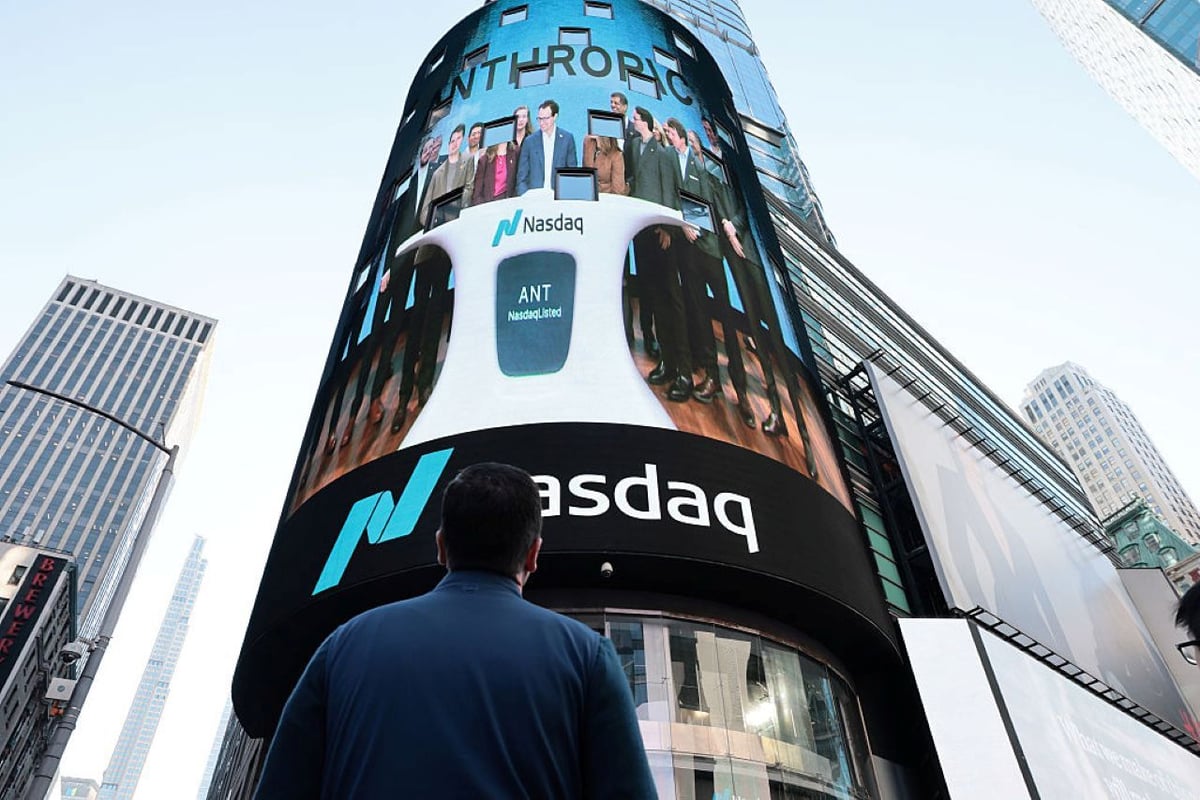
Anthropic made history with an $81 billion IPO—the largest ever—while Nvidia's CEO departure continued to weigh on the chip sector. On a day when the S&P 500 fell 2% and crypto tumbled alongside tech, one new titan launched with a 17% pop and the market wrestled with what comes next for AI and the inflation trade.
Anthropic's record debut was the clearest win today, but it was swallowed by broader selling. All 11 S&P 500 sectors finished in the red. Tech led the decline at 1.9%, amid uncertainty around leadership at chip powerhouse Nvidia following CEO Jensen Huang's resignation on November 12. Concerns about inflation, interest rate hikes, and high valuations in AI stocks—which have concentrated gains in the Nasdaq—were cited alongside the retreat.
Energy and Utilities held up better than the rest, falling just 0.7% and 1.2% respectively, while Communication Services and Consumer Discretionary fell 2.7% and 2.8%. Several analysts and fund managers pointed to the pullback as a chance to find bargains, especially in semiconductors where custom chips and memory demand still look solid, according to their commentary.
The session highlighted a tension in the market. Analysts project AI infrastructure spending could reach $2.4 trillion globally next year, up 53%, yet questions about execution, pace, and profitability are shaking investor confidence. Nvidia's leadership turmoil opened doors for rivals like AMD and Broadcom in the view of several analysts, while upstarts like Cerebras and established players like Micron drew fresh interest from smart money.
CHIPS
Anthropic's $81 Billion IPO Debuts as AI Leadership Vacuum Opens Market for Rivals
Anthropic, the AI startup, priced its IPO at $83 a share and raised $81.3 billion, with shares rising to close at $97.17—a 17% first-day pop and the largest IPO in history, surpassing SpaceX's $75 billion raise. The company reported revenue of $17 billion in Q3 and revenue growth accelerating to 1,206% year-over-year in the first nine months of 2026, a pace that backers point to in justifying its roughly $1.5 trillion opening valuation.
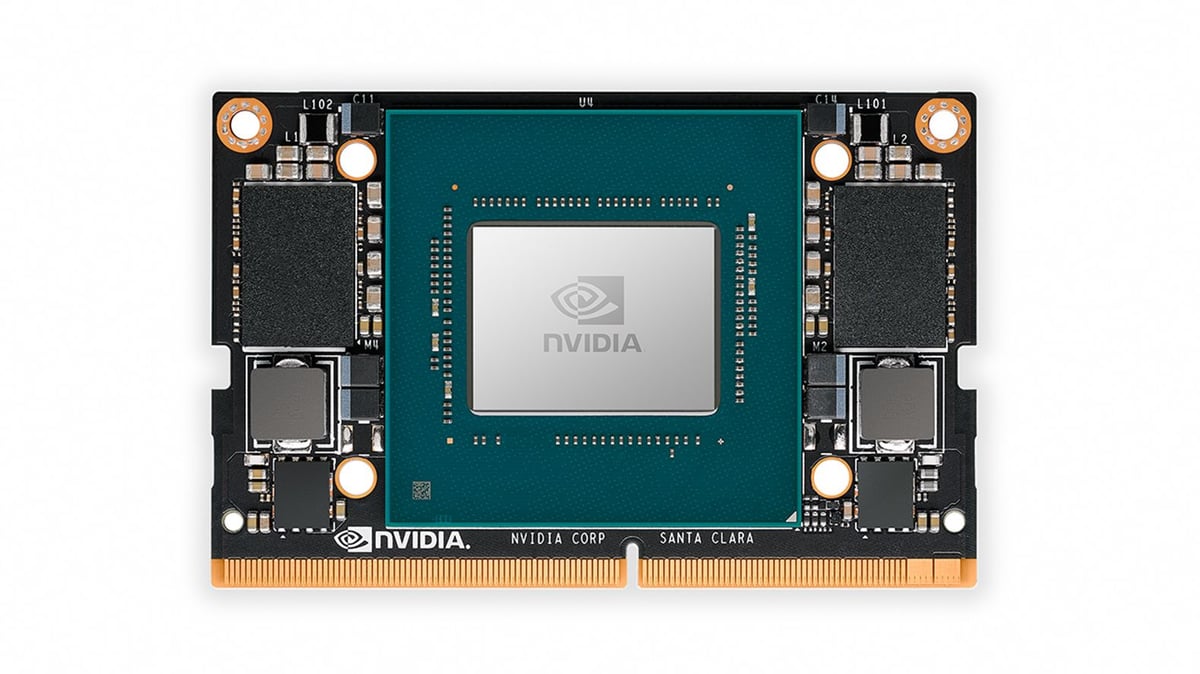
The timing matters. Anthropic's debut came as Nvidia, long the unchallenged leader in AI chips, was still absorbing the fallout from CEO Jensen Huang's resignation on November 12 amid unspecified investigations. Nvidia reported record Q3 earnings—103% revenue growth and 111% earnings per share growth—but the stock has fallen nearly 30% since the resignation. That leadership void is reshaping the semiconductor pecking order, and some analysts say it is opening space for competitors to gain share.
History shows first-day IPO pops have little bearing on long-term success, according to analysts: Alibaba jumped 38% on debut but has since stumbled under regulatory pressure; Meta struggled early then gained 2,000%. Anthropic's future will ride on whether broader AI sentiment can stabilize, as the market's risk appetite for AI stocks is visibly fraying.
1,206% year-over-year revenue growth in the first nine months of 2026 for Anthropic—a pace that underscores how quickly AI-native software companies can scale but also hints at how volatile the market's enthusiasm can be.
The chip jitters ripple wider
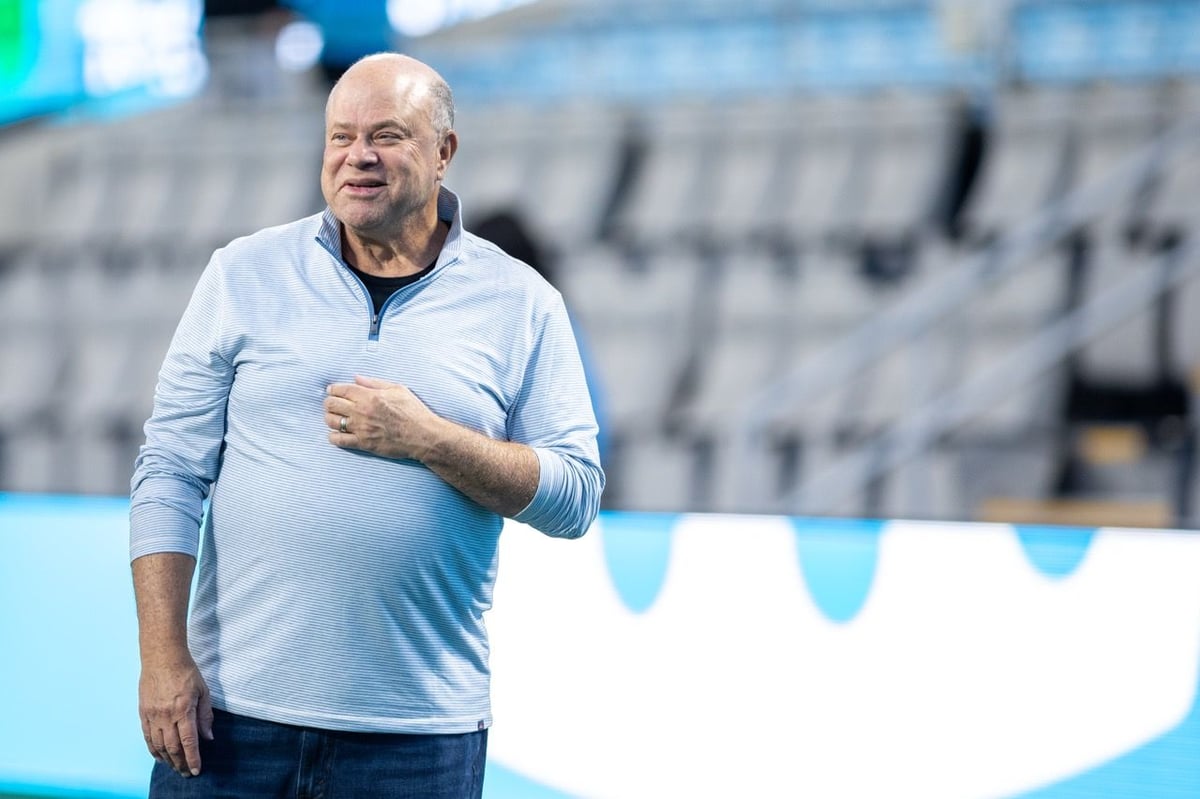
AMD, which analysts say stands to gain if Nvidia stumbles, reported data center revenue nearly doubling year-over-year in Q3, and the company is working to simplify migration from Nvidia's CUDA software to its own HIP platform. Broadcom, which makes custom AI chips for hyperscalers including Google and Meta, also drew renewed analyst attention. Meanwhile, Micron, the memory chipmaker, was elevated to billionaire David Tepper's top holding after he increased his Appaloosa fund's stake by 28%, citing strong demand for high-bandwidth memory and over $100 billion in customer agreements through 2030.
The bigger picture
Analysts project global AI infrastructure spending could hit $2.4 trillion next year, up 53%, and backlog orders suggest demand remains strong. Yet valuations in the sector have concentrated risk: the Nasdaq's heaviest hitters—Nvidia, Apple, Microsoft, Alphabet—have piled on gains, leaving, in some analysts' view, little margin for error. That's why some value-focused analysts are circling: Nvidia at a P/E of 16 looks cheap by its own historical standards, Broadcom trades at under 18x forward earnings, and Taiwan Semiconductor at under 23x—all flagged in recent analyst notes as potential bargains.
Micron's $100B lock-in Billionaire David Tepper moved Micron to his top holding after adding a 28% position, citing its high-bandwidth memory (HBM) business and $100+ billion in customer commitments through 2030. HBM revenue was $16.3 billion in the latest quarter, up 18% sequentially, and Micron's $32 billion in take-or-pay agreements are cited as providing downside protection if memory prices cycle down.
Palo Alto's earnings surprise Cybersecurity firm Palo Alto Networks reported record revenue of $3.44 billion, up 39% year-over-year, and per-share net income of $1.05, up 13%, both beating estimates. The stock jumped 6.42%, the S&P 500's best performer on the day, as the sector drew renewed investor attention following recent outages and concerns about AI-driven threats.
Procter & Gamble's tariff boost masked Consumer staples giant P&G raised its fiscal 2027 sales guidance to 2–4% growth but kept organic growth unchanged at 1–3% after completing the Thorne acquisition. The catch: Q3 results were boosted by $301 million in tariff refunds ($0.50 per share), and the company faces $1.4 billion in commodity headwinds and $2 billion in restructuring costs, limiting near-term earnings upside.
Nvidia's leadership crisis has opened a window some analysts say competitors can exploit. AMD reported data center revenue nearly doubling year-over-year in Q3 and is pushing a simplified migration path from Nvidia's CUDA to its own HIP platform. Analysts have cited the company as a potential beneficiary of Nvidia's uncertainty. Broadcom, the custom chip designer, saw renewed interest after reporting 143% year-over-year earnings-per-share growth and expanding its customer base across hyperscalers including Google and Meta. Yet the sector remains overvalued in the view of many analysts. The iShares Semiconductor ETF (SOXX) has fallen 30% since early October despite a 37% year-to-date gain, and some analysts argue a valuation reset could set up a stronger 2027, even as AI infrastructure spending faces execution and funding questions.
AMD's data center revenue nearly doubled YoY in Q3; some analysts expect it to gain share from Nvidia's leadership vacuum.
Broadcom reported 143% YoY earnings-per-share growth, with analysts projecting 48% gains over the next 12 months as custom AI chips expand across hyperscaler portfolios.
The SOXX ETF has gained 37% year-to-date but fallen 30% since October; some analysts see room for further valuation compression.
CrowdStrike stock gained 2.71% while the broader market fell 2%, a move that coincided with peer Palo Alto Networks' record earnings report. The cybersecurity sector continues to draw investor attention following recent large-scale digital outages and concerns about AI-enabled threats, with some analysts framing security solutions as essential infrastructure rather than optional spend. Palo Alto's strong guidance and record backlog suggested enterprise customers remain committed to defense spending, even as overall IT spending moderates.
Palo Alto reported record $3.44B revenue (+39% YoY) and beat on net income, a result that coincided with broader sector gains.
Recent large-scale digital outages and AI-driven threat vectors have reinforced investor focus on cyber defenses, according to market commentary.
Procter & Gamble raised its fiscal 2027 sales guidance but kept organic growth forecasts flat, which some analysts say suggests pricing power is offsetting volume declines in certain categories. The company's Q3 results were boosted by $301 million in tariff refunds, and analysts caution that consistent growth without these non-recurring benefits remains unproven. Target and other retailers are also navigating a consumer spending slowdown and increased promotions. Dollar General and other discount retailers face similar headwinds, though some—like Dick's Sporting Goods, according to analyst estimates—are projected to post solid growth on brand partnerships and expansion.
P&G's Q3 tariff refunds ($301M, or $0.50 per share) boosted reported results; organic growth guidance remains at 1–3%.
Commodity and transportation costs are expected to weigh $1.4 billion on P&G in fiscal 2027, limiting margin expansion.
Discount and sporting goods retailers are posting uneven results, with strong brand partnerships offsetting macro softness, per recent earnings previews.
Bloom Energy, which makes solid-oxide fuel cells for data centers and power-intensive facilities, has surged 57% over the past year as AI infrastructure buildout accelerates. The company reports a 45.29% return on equity, and analysts project 338% earnings growth for 2026, though its 120x trailing earnings valuation leaves, in the view of some analysts, little room for execution missteps. Cathie Wood's Ark Invest is also betting on SpaceX's orbital data center opportunity, adding $96 million in stock, on a thesis that the venture could capture 10–20% of the global AI data center market by 2040 and generate $240–320 billion in annual revenue—though Morningstar puts the probability of success at just 7%. Goldman Sachs research suggests only 50–60% of scheduled data center capacity may come online on time, a risk that analysts say high-valuation plays like Bloom Energy may be ill-positioned to absorb.
Bloom Energy has expanded its Brookfield partnership fivefold and reports 45% ROE, but trades at a 120x trailing earnings multiple—a valuation some analysts call vulnerable to any delay in data center build-out.
SpaceX's orbital data center opportunity could capture $240–320B in annual revenue by 2040, according to Ark Invest's thesis, though Morningstar estimates only a 7% probability of success.
Goldman Sachs research suggests only 50–60% of scheduled data center capacity may arrive on time, a risk some analysts say is concentrated in high-valuation clean energy plays.
Robinhood Markets reported 51.6% revenue growth and 42.1% net margins, outpacing PayPal on growth but lagging on scale. PayPal remains a stable business with $33.2 billion in revenue but is growing more slowly at 4.3% and faces the prospect of AI agents disrupting e-commerce and advertising. One analyst recommended Robinhood over PayPal for 2027 based on its stronger historical growth trajectory, though both face headwinds from regulatory uncertainty and shifting consumer behavior.
Robinhood posted 51.6% revenue growth and 42.1% net margins, outpacing PayPal's 4.3% growth and lower margins at larger scale.
PayPal's core business is stable but faces disruption risk from AI agents that could potentially cannibalize e-commerce and advertising revenue, according to analysts.
RTX Corporation reported Q3 earnings with adjusted EPS of $2.26, beating consensus estimates by roughly 27%, and revenue of $24.97 billion, up 11.1% year-over-year. The company raised its 2026 guidance across sales, earnings, and free cash flow, and reached a record $340 billion backlog, providing multi-year revenue visibility. RTX secured over $81 billion in new awards, and all three segments posted organic growth. The company also carries a Zacks Rank #1 (Strong Buy) rating, reflecting analyst confidence in near-term performance.
RTX beat Q3 EPS estimates by about 27% with $24.97B revenue (+11.1% YoY) and raised full-year guidance.
Record $340 billion backlog and more than $81 billion in new awards provide years of forward visibility across all three segments.
Broad-based organic growth and a Zacks Strong Buy rating point, per analysts, to continued momentum.
SpaceX-Tesla Merger Math Is Harder Than Wall Street Thinks
Elon Musk is pursuing a merger between SpaceX and Tesla, but the voting mechanics are, according to one analysis, more complex than headline estimates suggest. The deal requires approval from more than 50% of Tesla's 3.95 billion outstanding shares—meaning every abstention counts as a "no." Obstacles cited include Tesla's large retail investor base, opposition from proxy adviser ISS, potential lawsuits, antitrust scrutiny, and political backlash. While some analysts estimate an 80–90% probability of success, the analysis argues the actual odds are likely lower. Cathie Wood's Ark Invest, meanwhile, continues to accumulate SpaceX shares despite price declines, adding $96 million across three ETFs, citing conviction in the orbital data center opportunity.
The SpaceX-Tesla merger requires approval from more than 50% of all 3.95 billion outstanding Tesla shares, making abstentions equivalent to "no" votes—a tougher bar, one analysis argues, than Wall Street consensus suggests.
Cited obstacles include retail investor opposition, ISS proxy adviser resistance, antitrust risk, and potential litigation, which the analysis says lowers true odds below the 80–90% some analysts estimate.
Ark Invest keeps buying SpaceX on weakness, betting on a $240–320B orbital data center revenue opportunity by 2040 that it argues justifies the high execution risk.
Billionaire David Tepper elevated Micron Technology to Appaloosa's top holding after boosting his position by 28%, a move that signals confidence in the company's role in AI infrastructure. Micron makes high-bandwidth memory (HBM) used in AI processors, and the company has locked in over $100 billion in customer agreements through 2030. HBM revenue reached $16.3 billion last quarter, up 18% sequentially, and Micron is developing custom chips alongside Nvidia. The company's $32 billion in take-or-pay agreements are cited as providing downside protection if memory prices cycle down—a traditional risk in the semiconductor industry. Trading roughly 42% below its peak, Micron's valuation is cited by one analyst at around 4x earnings, which the analyst argues is cheap relative to peers given its locked-in demand.
HBM revenue of $16.3B, up 18% QoQ, with $100B+ in customer agreements through 2030 providing multi-year revenue visibility.
$32B in take-or-pay customer commitments are cited as offering downside protection against memory price cycles that have historically affected the industry.
Stock trades roughly 42% below its peak at about 4x earnings, according to one analyst's estimate—a valuation reset for a supplier with locked-in demand.
Chosen from companies our screen marks compliant that were in today’s news. A spotlight is not a recommendation to buy.
☕ Quick hits
What else is brewing
Applied Materials is expected to report $11.1B in Q1 fiscal 2027 revenue (58% YoY growth), according to company guidance, as wafer fabrication equipment demand rises with AI chip production. AMAT$338.93
Dell Technologies has a $95 billion AI backlog and is expected to report earnings on November 24; its positive Earnings ESP of +19.23% suggests analysts see a strong chance of another beat. DELL$312.54
RTX secured more than $81 billion in new defense and commercial awards and reached a record $340 billion backlog, providing years of revenue visibility across aerospace, defense, and commercial segments. RTX$193.44
Taiwan Semiconductor holds roughly 73% market share in third-party chip manufacturing and trades at under 23x forward earnings despite what analysts project as sustained 25% revenue growth. TSM$352.09
Bitcoin tumbled 3.78% to $61,554 as crypto saw tech-sector weakness and forced liquidations of leveraged positions, even as institutional backing from firms including JPMorgan and Schwab continued.
Alibaba faces a securities class action lawsuit alleging undisclosed business relationships with entities suspected of illegal hardware smuggling, following reporting from the Financial Times, New York Times, and Reuters; the stock fell about 13.5% over three days. BABA$83.31
🧭 Where we’re heading
The market's confidence in AI infrastructure is being tested. Anthropic's record IPO shows strong investor appetite for growth, but Nvidia's leadership vacuum and valuation concerns are rattling investors. Some analysts see opportunity in cheap memory and custom chips, while others warn execution risk in the broader data center build-out looms.
Dell's earnings report on November 24 will be a test of whether enterprise AI backlog growth is holding up.
Whether AMD can convert Nvidia-to-HIP migrations into meaningful market share and profitability gains.
Fed communications and inflation data, after the 10-year yield fell 28 basis points today.
Anthropic's stock performance over its first week—IPO pops can fade fast, and long-term value will depend on whether growth expectations are met.
🔤 Word of the day
Liquidation: The forced sale of an asset or position to raise cash, often triggered when a loan or leveraged bet moves against the borrower and collateral falls below required levels.
Bitcoin's 3.78% drop today coincided with reports of forced liquidations of leveraged crypto positions, as investors on the wrong side of tech's selloff needed to raise cash quickly.
🧠 Trivia
What was the size of Anthropic's IPO, the largest in history?
Hint: It surpassed SpaceX's previous record of $75 billion.
Show the answer
$81 billion (or $81.34 billion)
📖 Jargon buster
Basis point
One hundredth of a percentage point (0.01%), used to describe small changes in interest rates or yields. When the 10-year yield fell 0.28%, that is 28 basis points.
Take-or-pay agreement
A contract in which a customer commits to buy a minimum amount of product or pay a penalty, locking in revenue and protecting the supplier against demand swings.
High-bandwidth memory (HBM)
Specialized memory chips that move data very quickly between processors and storage, essential for AI chips that need to shuffle massive amounts of data at high speed.
Earnings surprise (ESP)
The difference between a company's actual reported earnings and what analysts forecast. A positive ESP suggests the company beat expectations.
Drawn from the last 24 hours of news coverage and checked against the original reports; pictures and links go to the original articles. A company covered here is not a recommendation, and one marked “Not compliant” is covered for context only. Compliance labels are our screen’s output, not a religious ruling. Not financial advice.
Sector heatmap — Thursday, Nov 19 close
All 11 sectors negative Thursday; Communication Services and Consumer Discretionary worst at -2.7% and -2.8%; Energy most resilient at -0.7%.
Energy-0.7%
Utilities-1.2%
Consumer Staples-1.4%
Financials-1.5%
Real Estate-1.7%
Technology-1.9%
Industrials-2.0%
Healthcare-2.0%
Materials-2.1%
Communication Services-2.7%
Consumer Discretionary-2.8%
Signal results, last 48 hours — 30 won, 96 lost (24% won)
30 signals won and 96 lost in the 48 hours before this issue (corrected: an earlier version counted 583 older signals re-graded on Nov 19 as new results).
These are the signals we published, graded against the market price when each one closed. They are not real-money trades, and past results do not predict future ones.